Today, the digitization of the construction industry is a key factor in the effective management of real estate and infrastructure. Modern technologies, particularly 3D laser scanning, are fundamentally changing the way we obtain accurate data on the actual condition of buildings—quickly, reliably, and in great detail.
This approach not only allows us to replace missing or outdated documentation but, above all, creates a solid data foundation for further use, such as building information modeling, facility management, or planning renovations and investments.
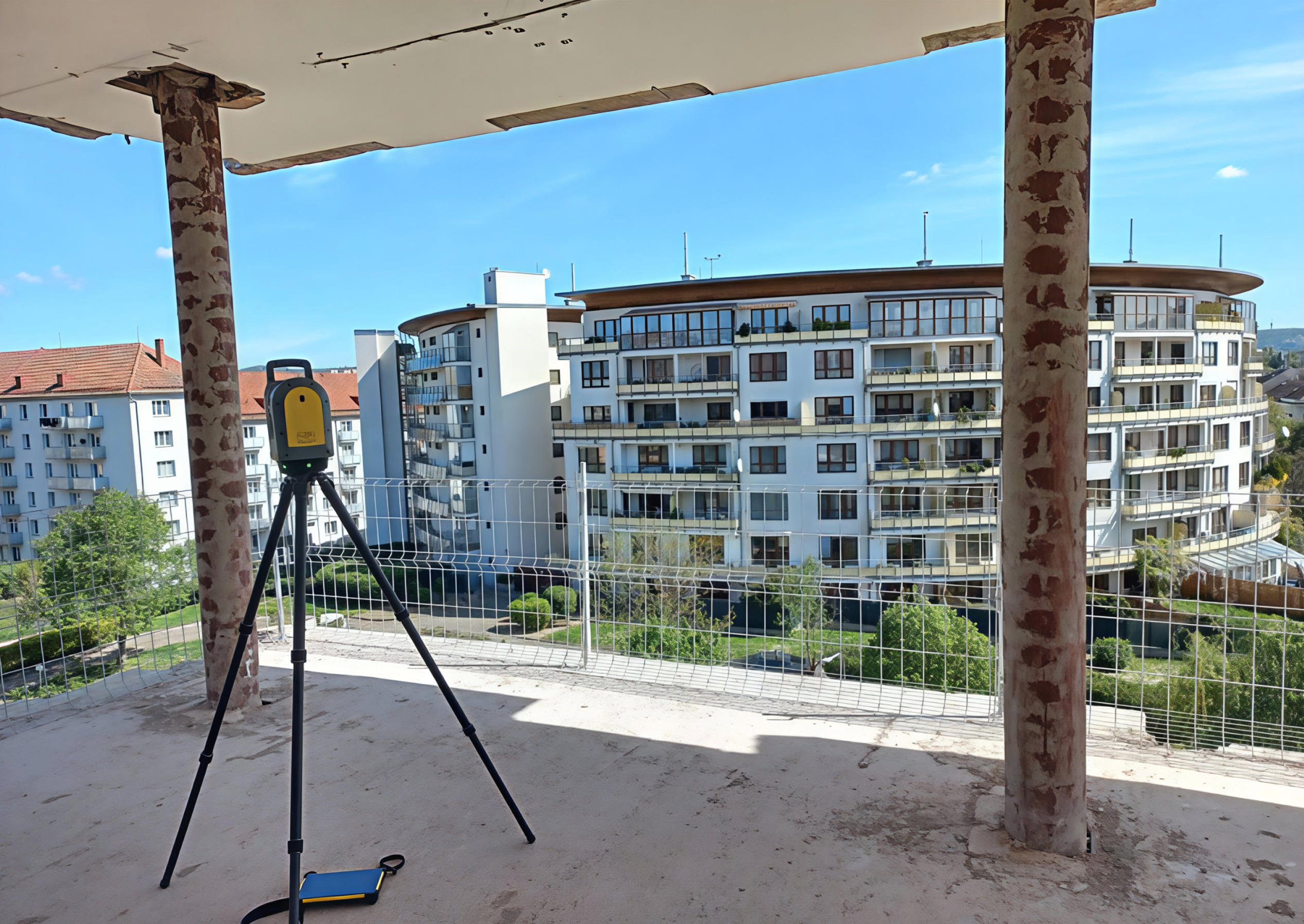
Today, building and facility management rely on high-quality data. However, many property owners and managers still struggle with incomplete, outdated, or entirely missing documentation of the actual condition of their properties. This complicates not only routine maintenance but also the planning of renovations, technical interventions, investments, and integration with facility management. This is precisely why BIM-based building documentation is coming to the forefront; it combines precise building surveys with the informational value of the model, creating a reliable foundation for further work. The main added value of advanced building documentation lies not only in visualization but, above all, in the depth of information within the model. It is not merely about digitization itself, but about a practical tool that helps save time, reduce uncertainty when preparing changes, and improve building management in the long term.
A building passport is simplified documentation of a building’s current condition, consisting of an accompanying report, a summary technical report, a site plan, and simplified drawings. Its scope is defined by Decree No. 131/2024 Coll., on building documentation. The Building Act also requires building owners to retain documentation reflecting the actual condition of the property for its entire lifetime. If the building survey is prepared using BIM, the result is not only a set of drawings but also a 3D model that can be further developed and used for management, modifications, and future projects. This approach provides significantly greater value than 2D documentation alone, as it allows the building’s geometry to be linked with descriptive information about structures, technologies, and operational relationships.
A good example of this approach is an extensive project to create a digital inventory of the interiors and exteriors of multiple buildings within a complex, carried out for the Hradec Králové Region. As part of this project, several buildings were digitized for the purposes of renovation, planning, and subsequent management. The output included not only standard 2D drawing documentation but also BIM models of the buildings, including models of technical installations. This is where the difference between a standard building survey and an advanced BIM-based survey becomes clear: the goal is not merely to “document” the building, but to create an accurate and long-term usable digital foundation for the building’s renovation, repairs, and management according to a clearly defined data standard that ensures the transfer of structured information about the structure among the various stakeholders. The CCI classification system was used as part of the project. This is a unified data language that is understandable across disciplines, tools, and software.
The foundation of this solution is modern, high-resolution data collection. For surveying both the interiors and exteriors of the buildings, we chose photogrammetry and traditional surveying methods. Using 3D laser scanning, we comprehensively surveyed all the buildings, which comprise hundreds of rooms and thousands of square meters of floor space. The resulting point clouds were then processed as a geometric basis for modeling in a software environment. Thanks to this combination of methods, it is possible to document the building in detail—including structural connections and technical systems—and convert it into a highly informative digital form. This applies even to geometrically complex structures, such as historic vaults or intricate technical installations. The resulting model is not merely a graphical output—it is a spatial database from which reports, statistics, and data for energy audits can be generated, or which can be integrated into a facility management system.
This project demonstrates that BIM is no longer limited to new construction projects or large commercial developers. It is becoming an accessible solution for any property owner who wants to effectively manage their properties, plan investments, and comply with legal requirements.
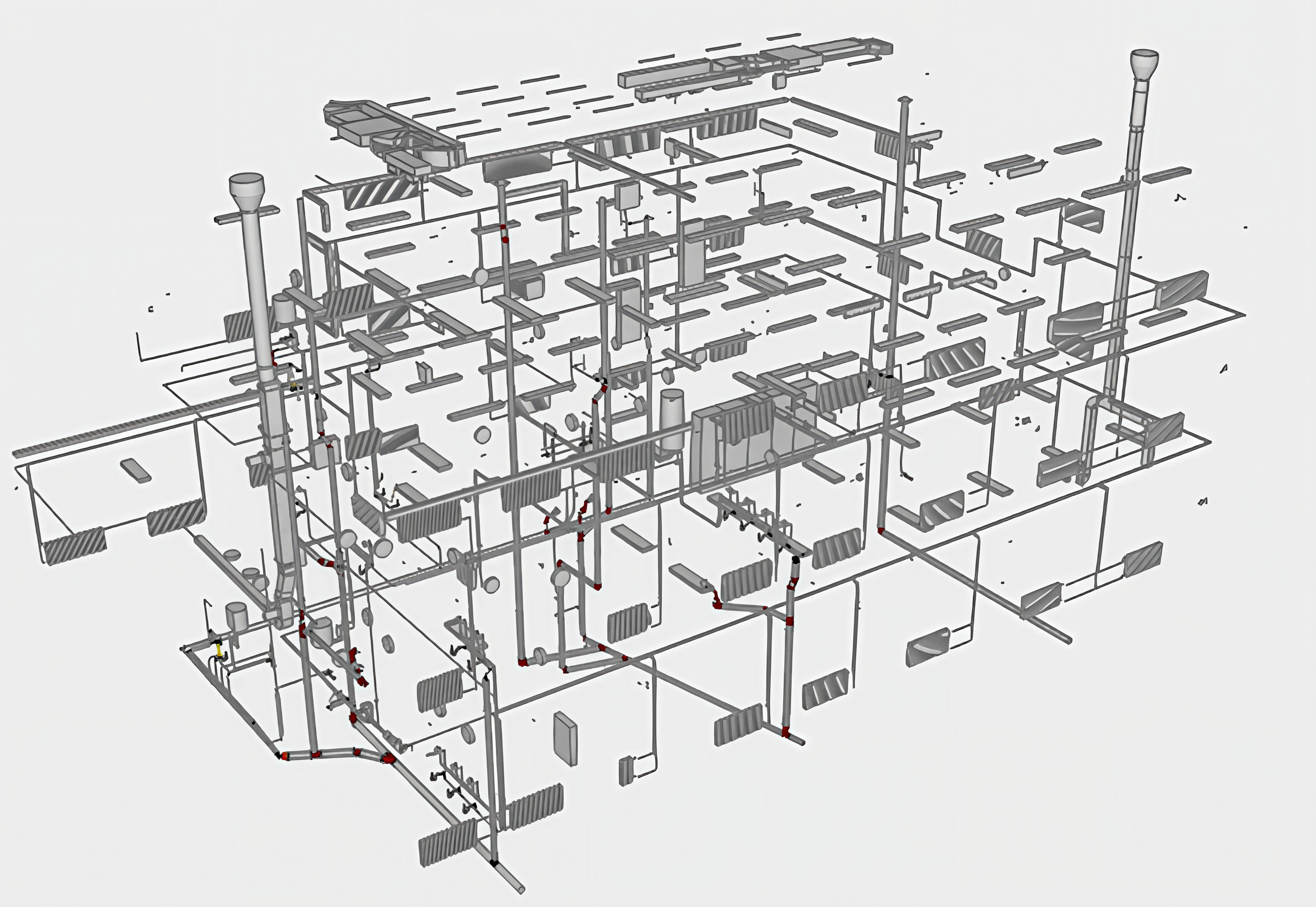
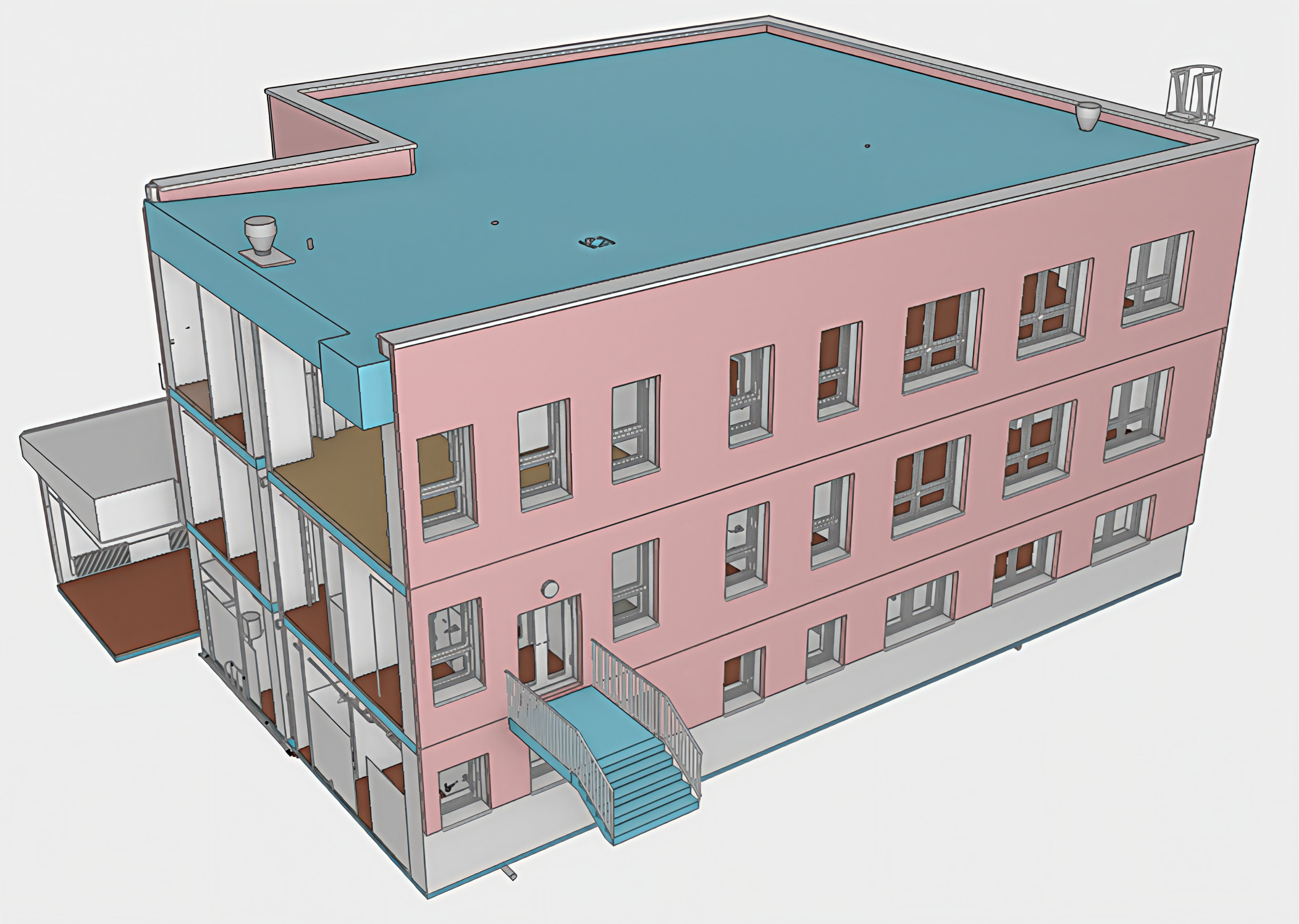
Using 3D methods, owners or managers can obtain accurate and detailed data about their properties. Compared to standard two-dimensional drawings, 3D data provides a significantly better overview of spatial relationships and enables faster and more precise decision-making. The model includes not only the architectural and structural components but, depending on the scope of the assignment, also structural engineering solutions and technical systems, such as HVAC, heating distribution, plumbing, high- and low-voltage electrical systems, and other specialized systems, including information on their interconnections.
The model thus becomes not only a visual representation of the building, but also a data structure suitable for coordination, analysis, asset management, and future operational use. In this context, BIM serves as a central data source for the entire lifecycle of the building.
From the perspective of the property owner or manager, this approach offers several key advantages. First and foremost, it allows for the quick and accurate updating of missing or outdated documentation. At the same time, it paves the way for integration with facility management and more efficient asset tracking in a digital environment. This makes it easy to generate reports, overviews, cross-sections at any location, or visualizations for both design and operational purposes.
BIM or 3D documentation is not limited to new construction projects. On the contrary, it works very well for existing buildings, where documentation is often incomplete or inconsistent. Experience from other projects shows that advanced BIM-based documentation is successfully applied to both public and private buildings, such as villas with valuable architectural details, historic buildings, courthouses, office buildings, and transportation infrastructure, including bridges, culverts, and railway tunnels. Each type of structure, however, poses specific challenges—historic buildings require heightened sensitivity when documenting complex geometric elements, while large complexes demand careful coordination of scanning and data management. Static laser scanning and photogrammetry technologies are sufficiently flexible to handle all these situations.
The common denominator is always the same: creating a reliable and up-to-date digital record of the structure that serves as the basis for informed decisions regarding the management, renovation, and development of the property.
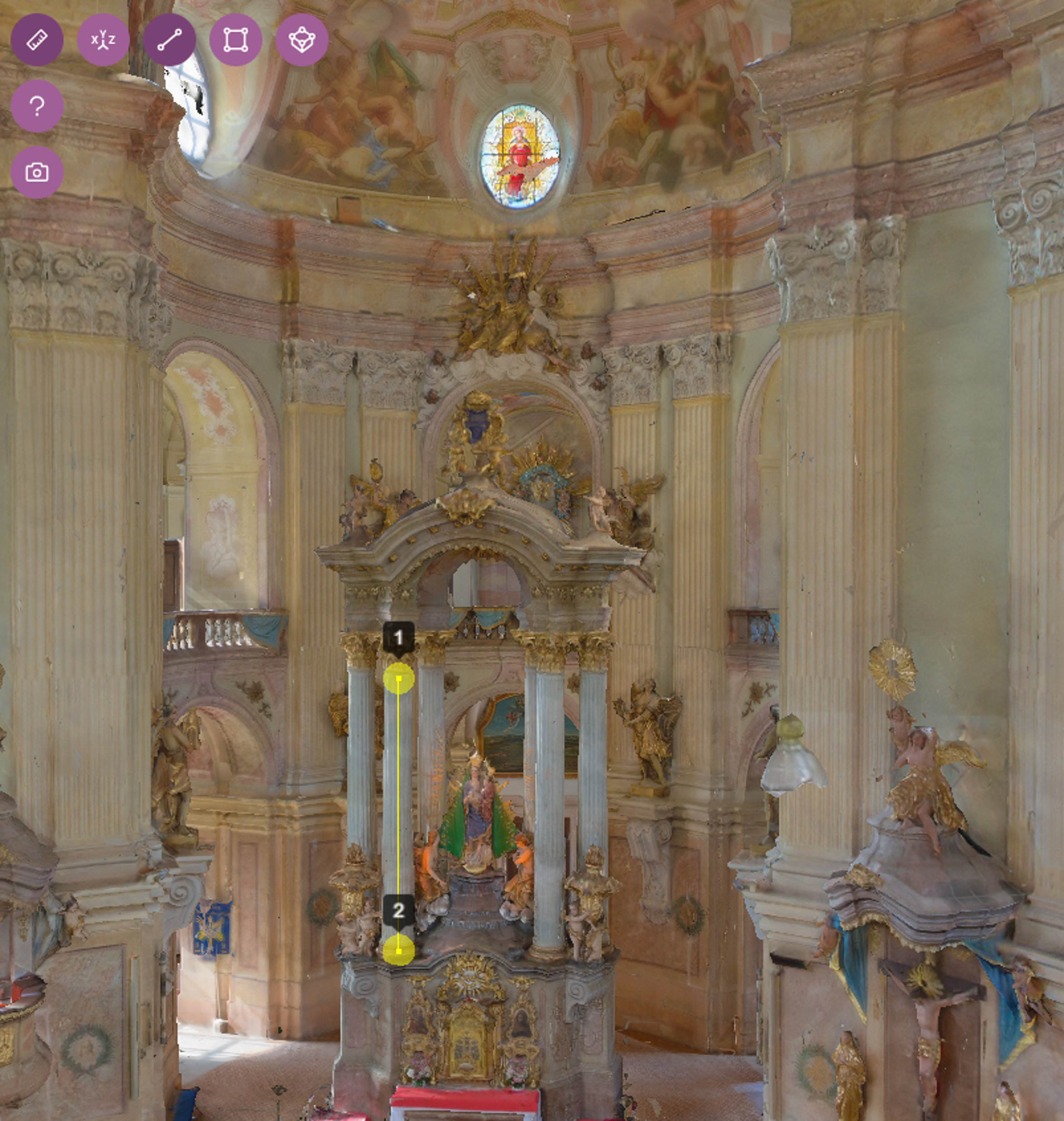
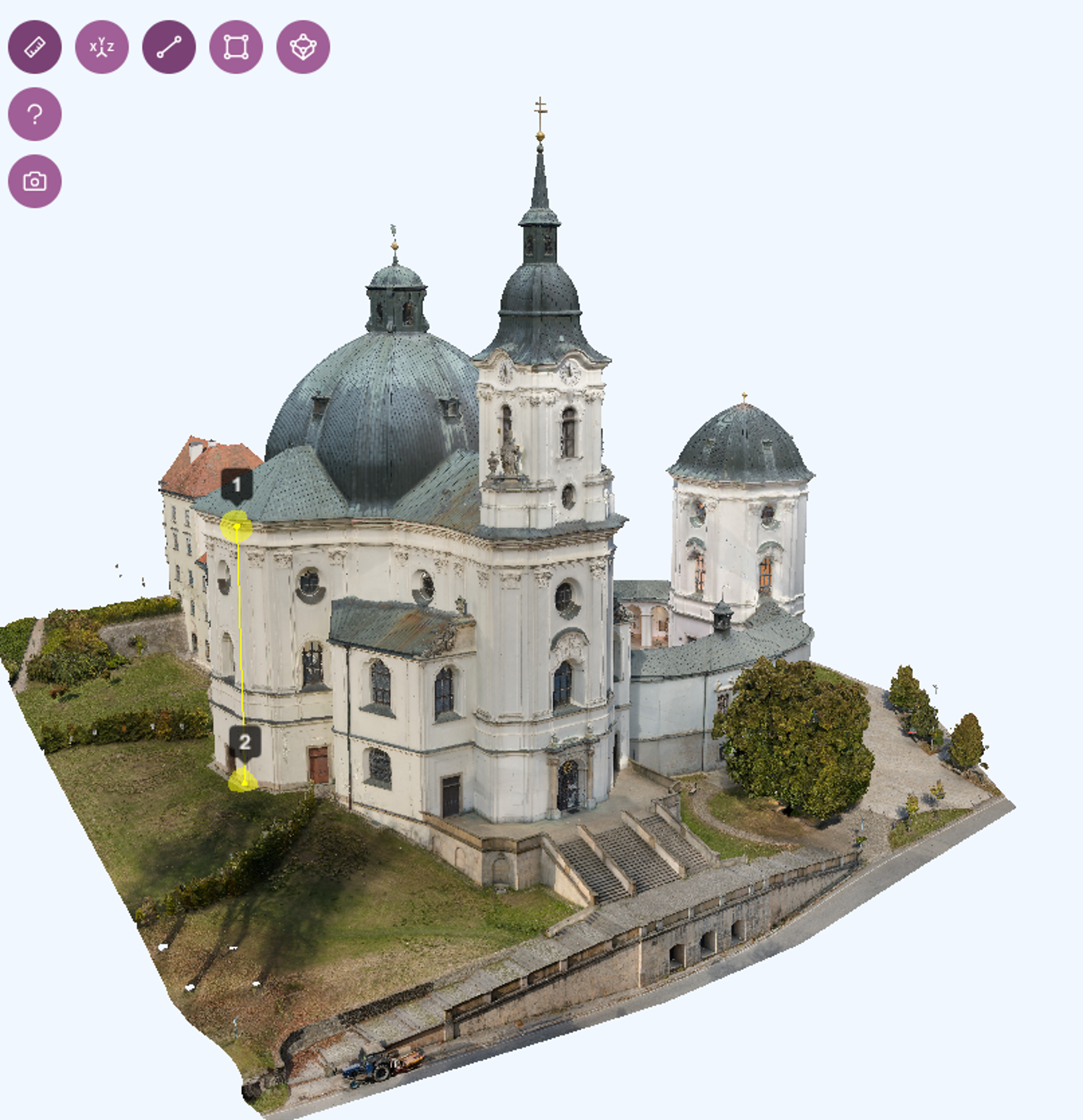
Modern building inventory systems are a key tool for digitization and effective asset management. Their benefit lies not only in the creation of up-to-date documentation, but above all in the conversion of data into a structured format that can be used in systems such as BIM, GIS, or CAFM.
Thanks to accurate and up-to-date data, decision-making processes are improved, particularly in maintenance planning, investment preparation, and cost optimization. At the same time, transparency and information accessibility increase, while the risk of cost overruns caused by poor-quality documentation is reduced.
From the owner’s perspective, this represents a shift toward data-driven asset management, which delivers greater control, efficiency, and the ability to make informed decisions.
Without high-quality and up-to-date data, assets cannot be managed effectively—modern asset mapping is therefore a fundamental prerequisite for their long-term, sustainable, and cost-effective management.
Without high-quality, up-to-date data, it is impossible to manage assets effectively, which is why modern asset inventorying is a fundamental prerequisite for their long-term, sustainable, and cost-effective management.
For more information on 3D scanning and BIM modeling, visit www.bim3d.cz.
Ing. Miroslava Kubíčková, Ing. Veronika Kastnerová